

Creating a digital future with Cimatron
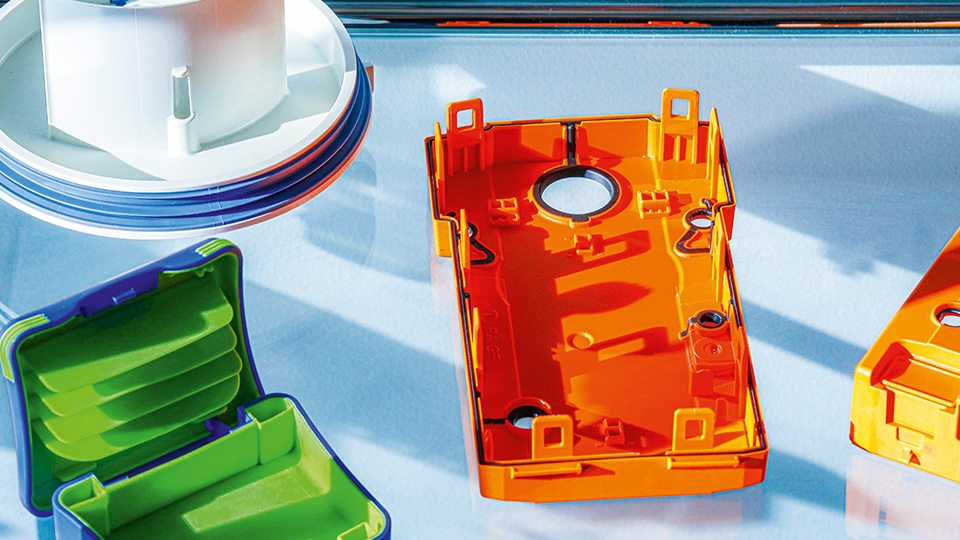
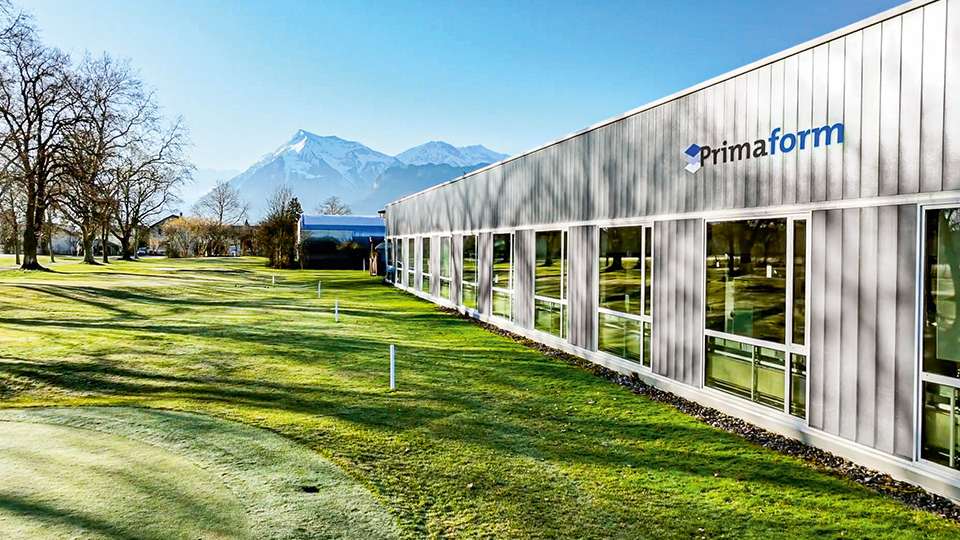
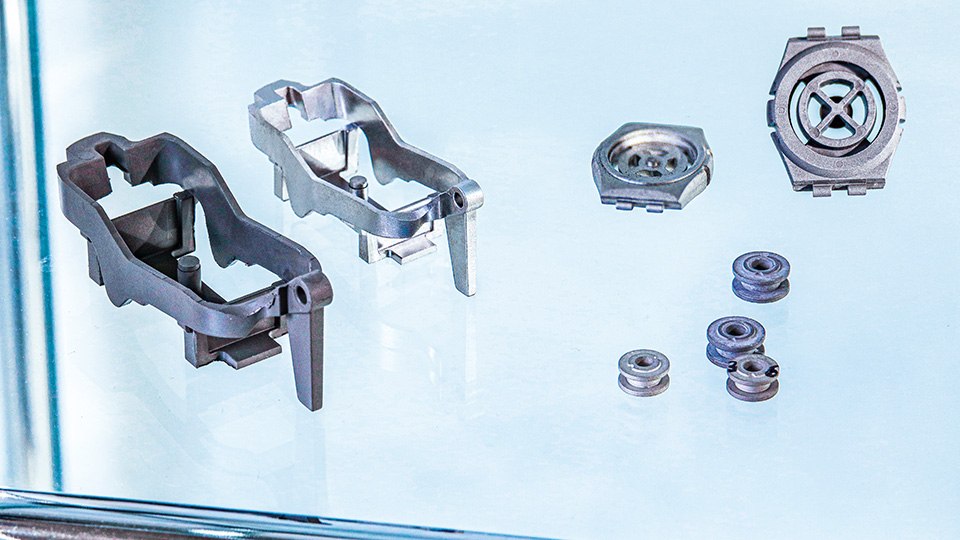
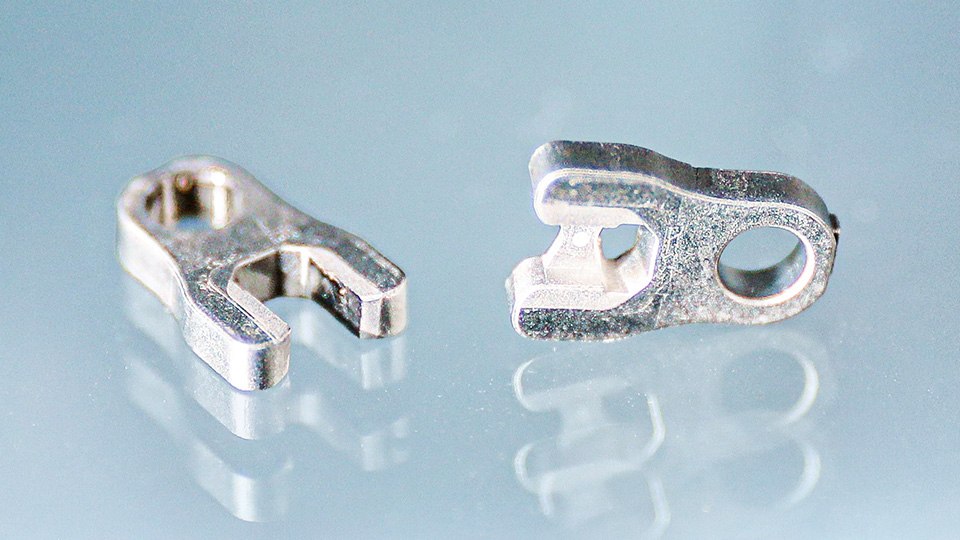
Nestled in the heart of Europe, Primaform’s company headquarters in idyllic Thun, Switzerland, are surrounded by mountains and lakes that lend it a sense of confident calm. Founded in 1965, the tool and moldmaking company primarily serves customers in the DACH region, as well as in Scandinavia, the United States, and Mexico. With 65 employees, it manufactures around 60 tools and molds per year for customers in the automotive, medical, watchmaking, and packaging industries.
That a significant portion of the company’s workforce is made up of former apprentices demonstrates that Primaform is a desirable place to work. The company is agile, forward-thinking, and committed to continuous improvement.
“We are proud of how we have evolved and are continually evolving,” says Stefan Huber, a 65-year-old toolmaker and mechanical engineer who has served as managing director at Primaform for 24 years. Huber has held a special role within the company as a mentor and project manager since 2025 and is now approaching retirement.
“Right now, we are focusing on software-related topics.” The central task, Huber says, is to implement digitalization not just for individual machines, but as a fully integrated system.
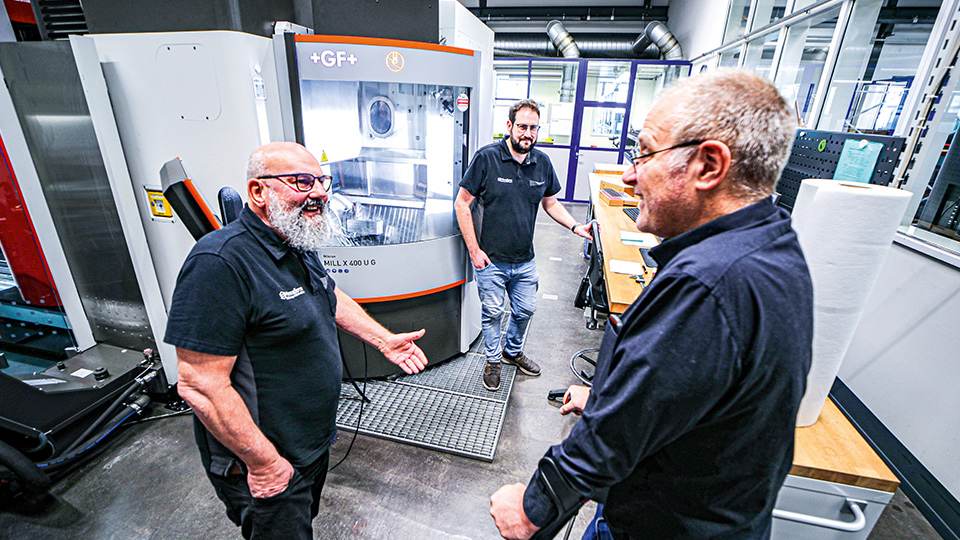
“That is exactly where we can still gain competitive advantages,” he says. “Anyone can do standard work, but our goal is to rise above the standard — in design, in toolmaking, and in the production of individual parts.”
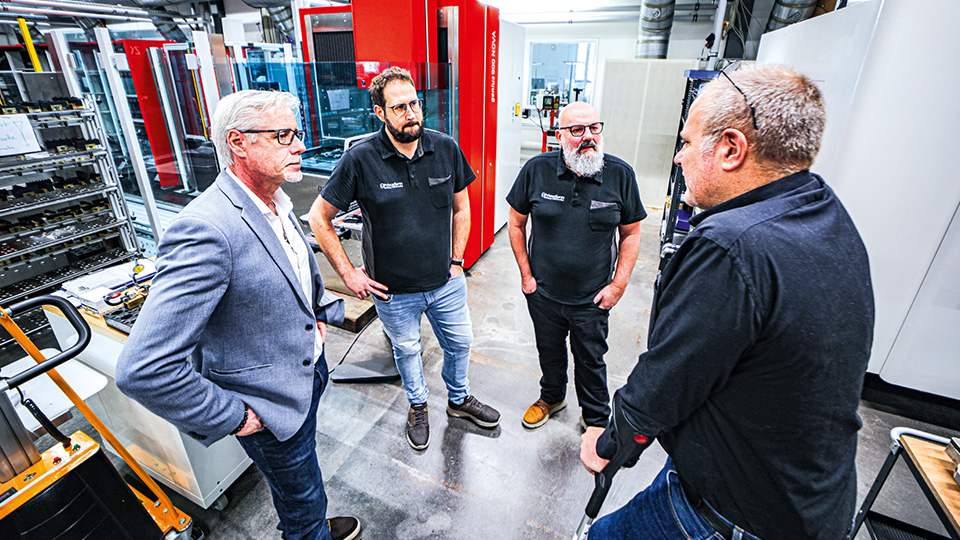
This forward-looking attitude enables Primaform to deliver added value to its customers, a goal reflected throughout the company.
Even the design of the company headquarters, constructed in 2001, was purposeful, as it serves the workflows required for tool and mold production. Perhaps typically Swiss, the aesthetic is reserved and the materials carefully chosen. The floor, for example, is made of magnesite screed, a wood-stone flooring material that provides cushioning while remaining impact resistant, absorbs moisture to a certain degree, and only needs to be damp-mopped every three months.
Although 25 years of use have left visible traces in the homogeneous material, these are not considered flaws. Rather, they reflect Primaform’s philosophy of making decisions thoughtfully and with foresight, remaining mindful of lessons learned while continually working on something new. The company is busy, but never frantic; the work is carried out with calm and attention to detail.
Investing in technology and, above all, people
Primaform purchased its first two Cimatron licenses, for electrode production, in March of 2015. A comprehensive rollout of the software followed in early 2025, after Primaform had carefully considered future goals for its manufacturing processes.
The transition from the old system to the new took only three months, and this consistent implementation highlights both Primaform’s agility and its confidence in both the software and its provider.
Today, Cimatron runs on 63 computers throughout the company, with 24 Viewer licenses, eight Designer licenses, 10 Master Solution licenses, seven 5-axis licenses, and three Electrode licenses — including extensions like the Springback Deformation module. Using simulation results, this module makes it possible to quickly and easily compensate for shrinkage and warpage in plastic or sheet-metal components.
Cimatron was a 3D CAD application from the very beginning. Our customers came from many different industries, so the requirements for importing and processing models were equally diverse. That is why we have always placed great emphasis on what is known as tolerant modeling, which allows surfaces to be processed in combination with solids in a hybrid environment.
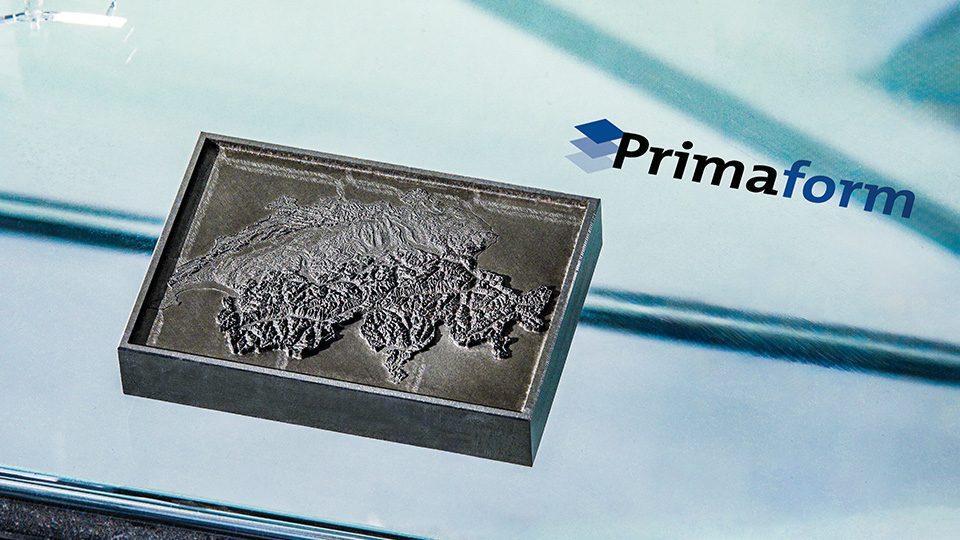
“We have invested a great deal in machinery and software over the past two years,” Huber continues, “but above all in our employees’ workplaces.”
Primaform’s management believes that employees should feel comfortable — not only in a clean environment, but one in which they enjoy spending time and are encouraged to be creative. This mindset also shaped the company’s software transition and broader digitalization efforts.
“We no longer have any paper here. Instead, every employee has access to either a Cimatron Viewer or the full version, and CAM programming takes place at workstations directly at the machines,” Huber explains. The company deliberately embraces decentralization so that it is less dependent on the expertise of individual employees.
Integrated CAD/CAM and the digital twin
“Our decision to use Cimatron was based on our desire to have an industry-specific, integrated system rather than individual expert systems,” Huber explains. “As part of our automation efforts, we wanted to transfer geometry from design, as well as data from measurement and NC programs, into manufacturing with as little effort as possible. Cimatron was clearly the first choice for that.”
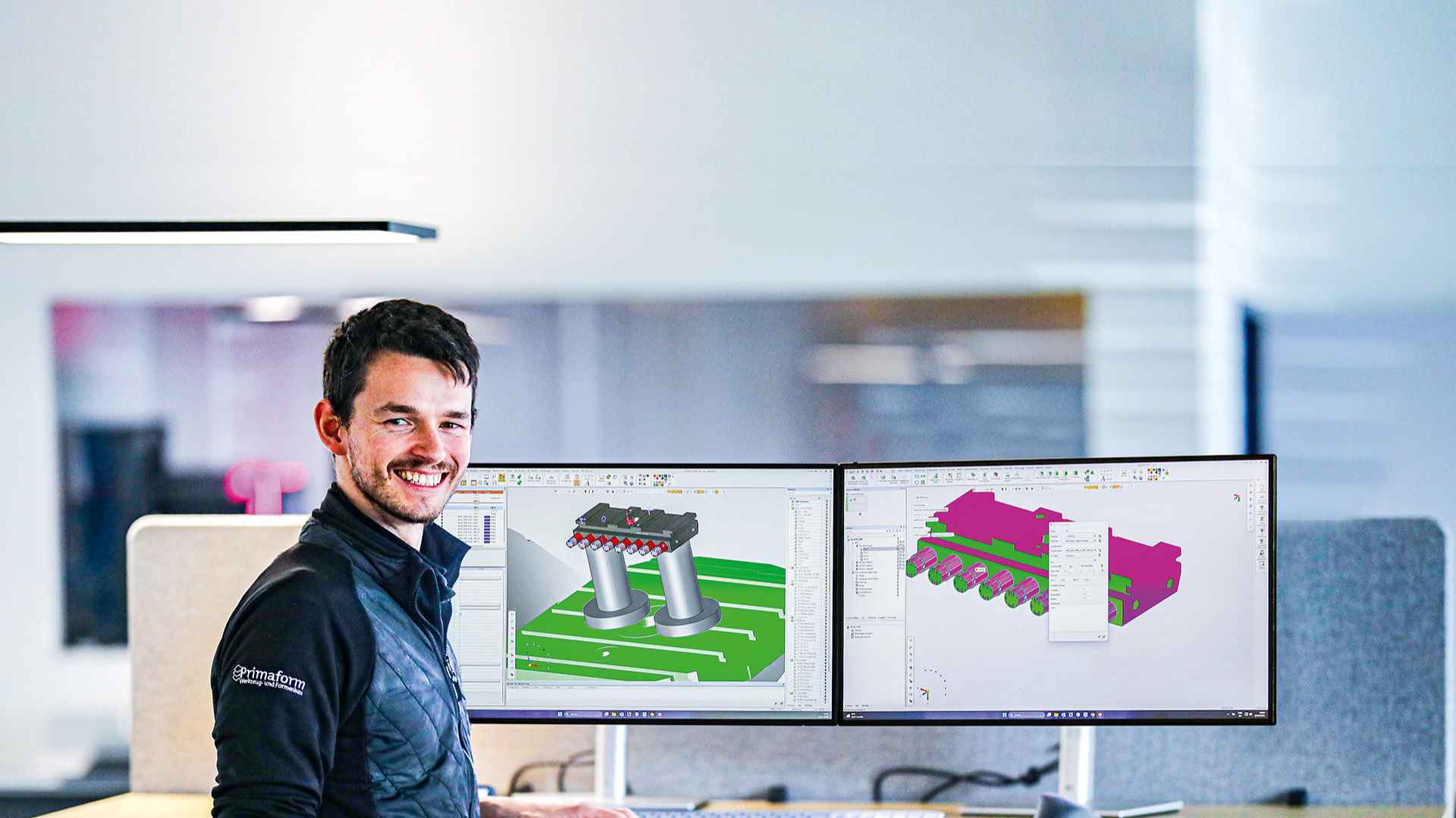
The digital twin is essential in this context, and Primaform has made it mandatory for every component it manufactures. The digital twin includes the 3D model of the component and machining simulations that can be compared with actual results in real time.
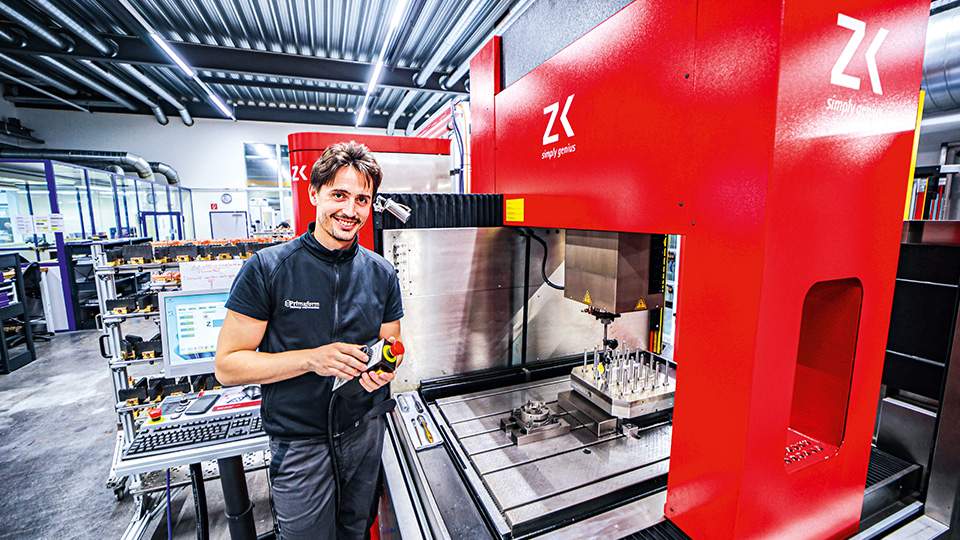
“What happens here in CAD before the data is transferred to manufacturing includes all of the preparation data that we store in the digital twin,” Huber explains of Primaform’s process. This provides a constant overview — not only of what a component looks like and its dimensions, but also of how the machining operations are defined.
For example, users can see which parts are to be finish-milled directly or hard-milled, which are to be ground, die-sunk or wire-EDMed, and where a start hole or laser engraving is to be positioned. “Additional information from design, such as quantities, functional surfaces, tolerances or machining allowances, surface finish, material, coating, or hardness, can also be pulled directly from Cimatron,” Huber says.
The strength of the digital twin is especially evident in electrode design. “Here we plan the entire manufacturing process — not just the workpiece geometry, but also the clamping fixture and the situation inside the machine workspace while the electrode is being milled,” explains Cirill Huber.
The 37-year-old designer and mechanical engineer has been with the company for nine years and is now a member of management responsible for production planning, design, the technical center, and IT. Given this background, he is deeply involved in the company’s structural changes and is proud of the concept the team has developed. “All cutting tools are modeled exactly as we see them in the machine.”
This is especially important for collision avoidance in 5-axis machining: By designing a setup that reflects reality, the machine kinematics can also be simulated. “In electrode production, we are also trying to work fully automatically using milling templates and standardized models.” The result is highly efficient programming, Cirill Huber says.
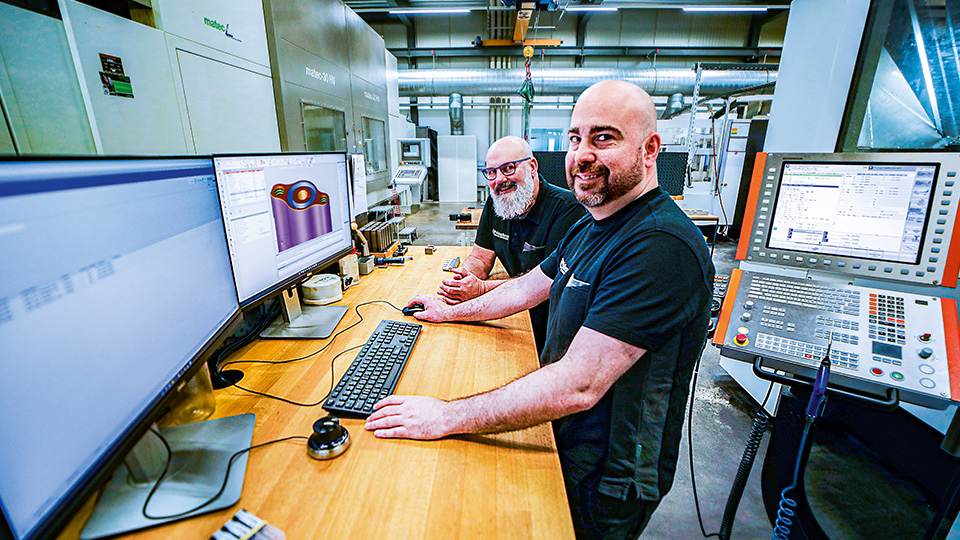
At Primaform, the digital twin also defines process parameters for the EDM process that will later use the electrode to machine steel. Electrode designers specify information such as electrode material, zero points, and starting height. The undersize is again retrieved automatically, and even the current or axis acceleration for sinker EDM is suggested. “This allows our colleagues in CAM to complete the programming in a very targeted way,” Stefan Huber explains.
We are at the bottom of the food chain and always under pressure. Faster is therefore always better. Cimatron helps us do that!
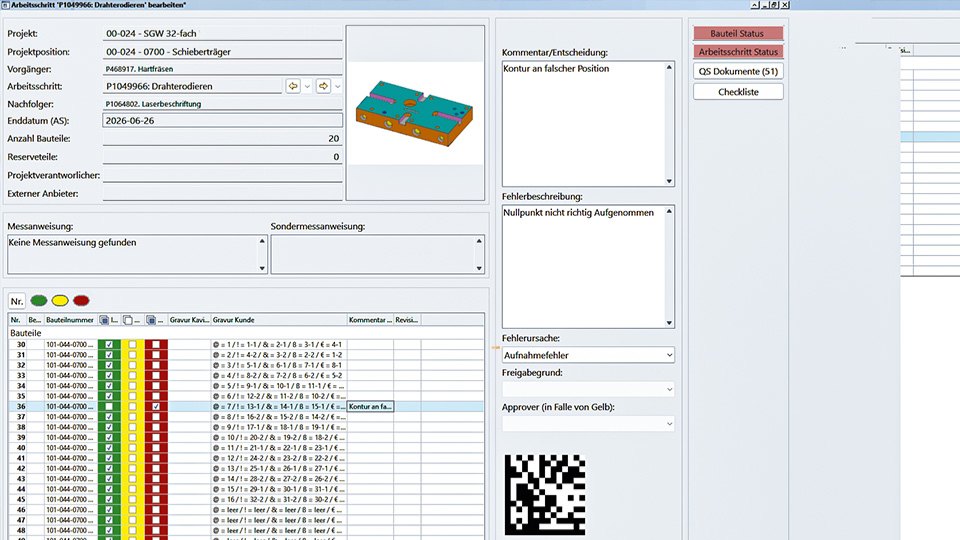
Integration with the IKOffice ERP System
Stefan Huber and his team wanted the introduction of Cimatron to be as robust and fully integrated as possible, so a need for version management was quickly identified.
However, implementing a separate product data management system from an outside provider was not an option. In the search for an integrated solution, the company selected the IKOffice ERP application.
“The developers were willing to work with us to create a solution tailored to our needs,” Cirill Huber says. The application was intended to connect directly to Cimatron through automatable interfaces, allowing it to represent Primaform’s product development and fit seamlessly into the integrated Cimatron environment.
It was a win-win opportunity to optimize both product portfolios — one that neither the Cimatron nor the IKOffice developers wanted to pass up.
Ultimately, it was implemented successfully in the interest of a third winner as well: Primaform.
“There is nothing comparable on the market in our industry,” Cirill Huber says, noting the substantial resources and expertise Primaform contributed during development. “Future customers of IKOffice and Cimatron will benefit from that, too!”
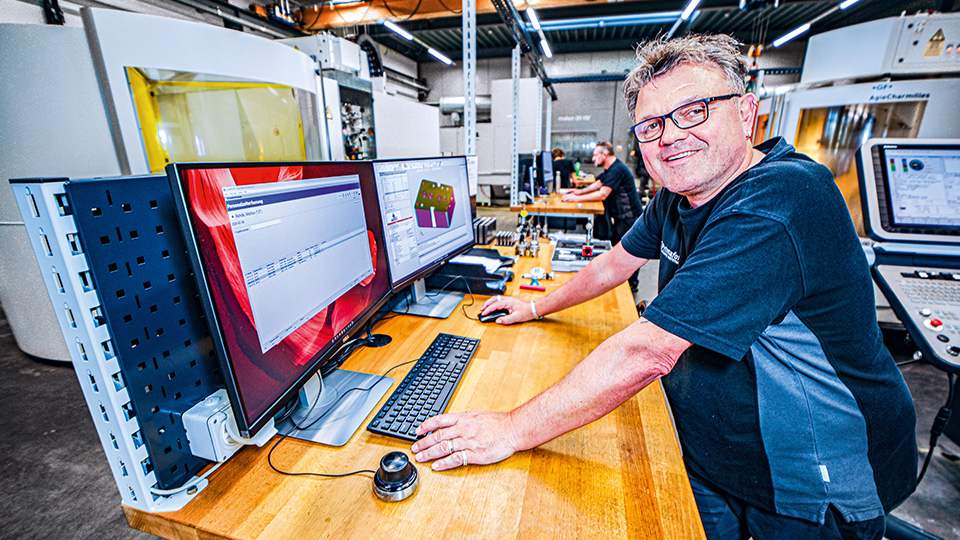
“Our basic idea was that the designer should simply be able to start working,” Stefan Huber explains of the team’s initial thinking. “Today, a designer can use a standard structure in Cimatron that has already been customized for us and name the parts however they like.”
A CAD project created in IKOffice has a corresponding Cimatron file that is transferred into the system for additional work.
For example, IKOffice automatically creates its own logical structure, including subfolders, for the many component files belonging to an assembly. Users can also jump to the assembly or project level, where information such as project status or sampling data is stored.
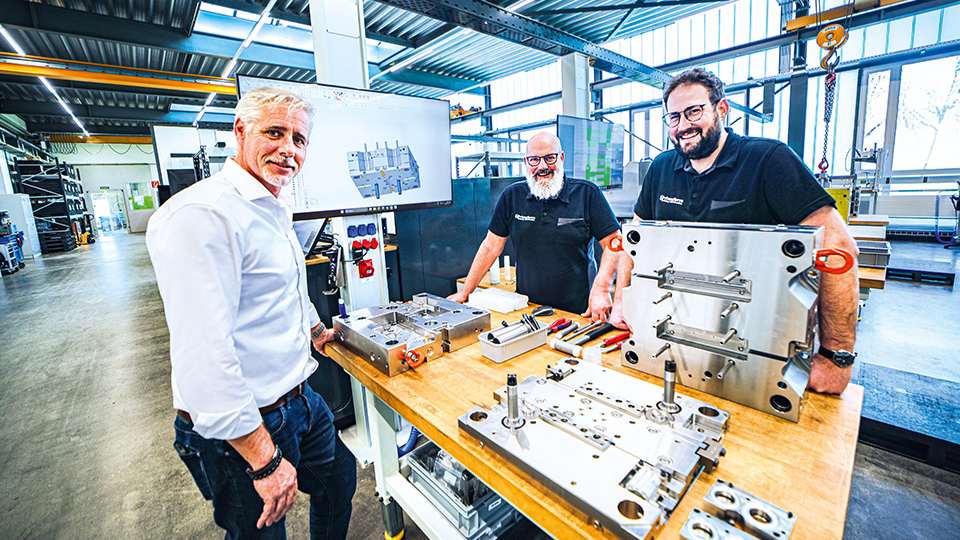
More than 5,000 completed jobs were migrated from the previous system so Primaform employees can draw on the company’s wealth of data when planning projects.
“We want to learn, after all,” Cirill Huber says, noting that all commercial details are available, along with the full ERP functionality. “In CAD, we are currently transferring projects as needed and updating things such as tolerances and markings so they fit consistently into the new workflows.”
Standing still is not an option. Continually doing new things, moving forward, and preparing for the future — that is our mindset. Enthusiasm for the product and the process is essential to what we do.
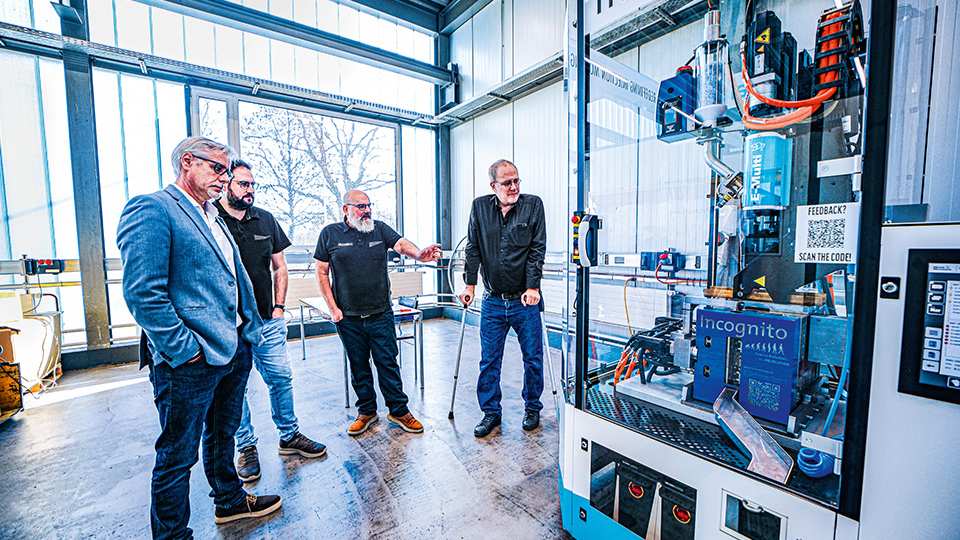
Stefan Huber is enthusiastic when he talks about the system: “The great thing about integrating IKOffice is that we can open components directly in Cimatron from the ERP system and always see the current work queue. Everything comes from a single source, which allows us to plan by component rather than by job. It also means we can continue to digitalize more processes in the future because we have already developed all the building blocks for that in our planning.”
The system’s parametric logic and consistent data foundation also allow Primaform specialists to make adjustments when reusing similar projects or implementing changes in a structured and efficient way. For Stefan and Cirill Huber, this repeatability through the digital twin is the basis for automated programming and for pattern and part recognition.
The overarching goal, they say, is ultimately ‘industrial manufacturing with a lot size of one.’ If the company wants to move beyond traditional tool and moldmaking and remain competitive in Central Europe, there is no way around it, Stefan and Cirill Huber say.
The job schedule is coordinated with the shift schedule, as well as time tracking — including vacation schedules — so that available capacity can be calculated precisely. When a Primaform employee starts work, they check the personnel time-tracking system, see their personal work queue, and later record the job times there, as well.
“Everyone can see what they need to do and which processes come next, which allows the workpiece to follow its digitally predefined route through the company — provided the planning is correct and no one takes shortcuts,” Stefan Huber explains with a satisfied grin.
His pride in how well the system works is evident. “Ultimately, what matters to me is the workpiece that comes out at the end and how effort goes into producing it.”
For Huber, considering design, CAM, or assembly in isolation is irrelevant when looking for optimization. More than that, one must understand that greater automation in programming requires a certain amount of additional effort in design.
“Operational reliability and a good result at the end, both in terms of quality and economics, are the goal. This way of looking at things is essential to me!”
As soon as something no longer has to be transferred manually, typos and incorrectly entered data are a thing of the past. In toolmaking, it is crucial that a component can be machined autonomously and unmanned overnight, and Cimatron helps us gain the reliability we need for that.
Functions tailored to tool and moldmaking
A major advantage of Cimatron, in addition to its CAD/CAM integration, is that it provides solutions and functions developed specifically for toolmakers. Designers, for example, have access to parametric libraries, and components from various suppliers are available in Cimatron and can be placed in a design with the corresponding cuts.
Stefan Huber says this greatly simplifies the process: “If we place a screw, the application uses the associated cutting body to create all the holes, counterbores, and threads in the design, as well.” The correct tolerances and fit information are also displayed via color coding.
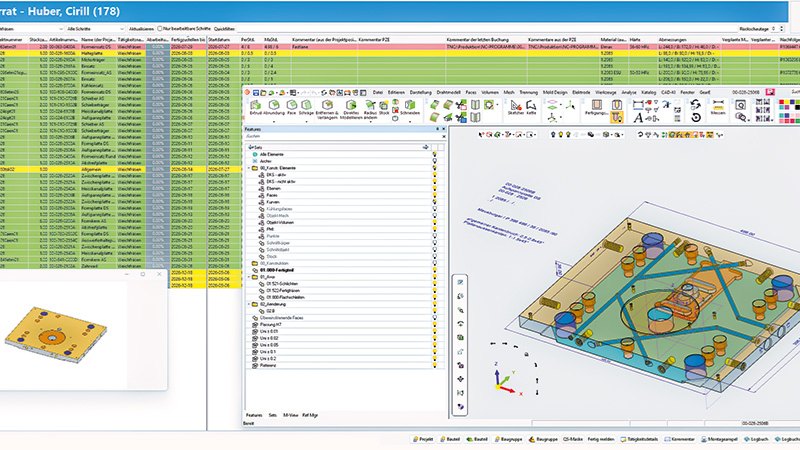
Cimatron can also easily determine the ideal position of ejectors, as well as their trimming length based on the mold design and the corresponding holes through the plates.
“All of that makes our work much easier!” Cirill Huber says. Overall, Cimatron combines numerous design tasks that would otherwise have to be completed in many individual steps.
Stefan Huber identifies another challenge Cimatron helps address: The designs provided by customers today are often less developed with manufacturability in mind than they were in the past.
“We often have to make some manufacturing-related adjustments,” he says. Engineering functions integrated into the software for gating and injection systems, as well as for cooling-system design, help with this work.
Our system would not be at the high level it has reached today without customers like Primaform. Customers who are always thinking several steps into the future ultimately drive our development, as well.
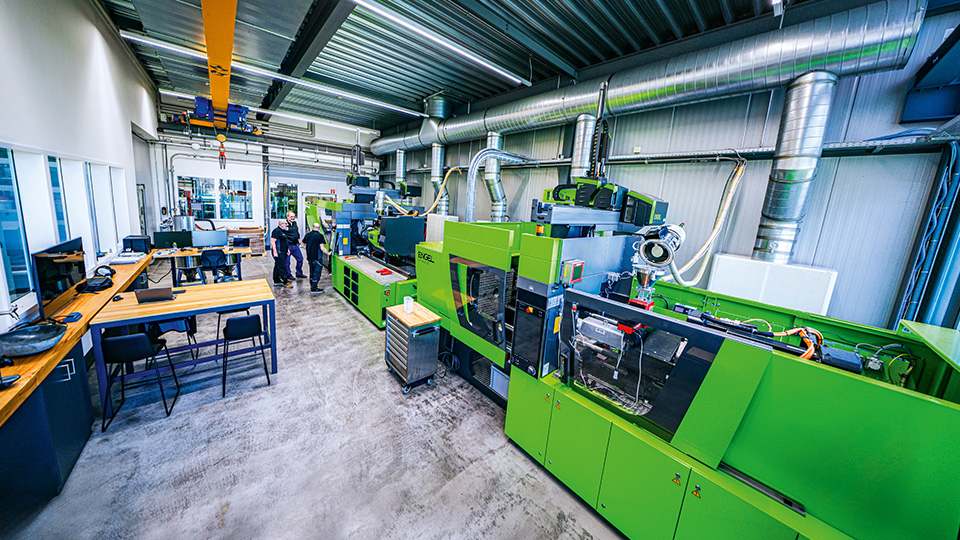
Primaform performs mold trials on its tooling, analyzes tooling made by other companies, and produces pilot-series parts or components to help customers with production.
“All of the machines are highly integrated through interfaces. That means we can also carry out virtual mold trials here and display the entire process in real time,” Cirill Huber explains. “We have cameras in front of and inside the machines, and we can bring the control interface onto the screen — as well as the microscope view.”
The same applies to Cimatron’s ability to design in a hybrid environment — that is, using both surface and solid modeling.
“Data quality is critical. Otherwise, things go wrong when you get to production and the cutter flies because there is still a hole somewhere in the geometry. Or the contour for wire EDM is not closed and the wire heads off in some direction while cutting,” Stefan Huber says.
In the past, the company spent hours and days on electrode extraction “when the data was poor. But even very early on, Cimatron was able to help us use its surface model to clean everything up properly.”
Excellent support and collaboration
A major advantage for Primaform is the support provided by Cimatron.
“We feel listened to, and support is always available when we have questions,” Stefan Huber says, highlighting a benefit that is especially valuable in daily operations or when working on projects after the training provided during implementation.
But Primaform also continually challenges Cimatron’s specialists.
“We are never satisfied with what we have,” Stefan Huber says with a laugh. “We are always thinking about the future. In Cimatron, we have found an ideal partner to support us on this journey.” The software is continually developed, and the provider responds flexibly to users’ requirements. Primaform is currently exchanging ideas with Cimatron technicians about how design processes could be made even easier in the future.
Andreas Sterzenbach, Cimatron sales representative for Switzerland and much of Baden-Württemberg, emphasizes that everyone involved benefits from this close collaboration.
“Without customers like Primaform, our system would not be at the high level it has reached today. Users who are always thinking several steps ahead ultimately drive our development, as well, and other users benefit from that.”
Staying above the standard
Stefan Huber ultimately returns to what defines the company at its core: “I am never satisfied with what we have achieved, and I am always looking ahead to the next goal. Without that attitude, we would not be where we are today as a company.”
It is precisely this drive to rise above the standard that has made Primaform, from its idyllic home in Thun, an internationally sought-after partner for high-tech customers — and that continues to propel the company forward.
Stefan and Cirill Huber emphasize that Cimatron plays an important role in achieving these ambitious goals. “We are completely convinced that the direction we have taken with Cimatron is the right one,” Stefan Huber says.
Primaform: facts and figures
– 65 employees
– 60 tools and molds manufactured per year
– 7,000 electrodes manufactured per year
– 63 Cimatron workstations
– 5,000 jobs migrated following the introduction of IKOffice
We appreciate Cimatron’s agility — and the fact that we are a customer whose voice is heard there.